By analyzing bowel movement frequency in more than 268,000 people, researchers uncover how thiamine-processing genes shape gut motility, link constipation and diarrhea to shared biology, and point to new therapeutic possibilities for IBS and related disorders.
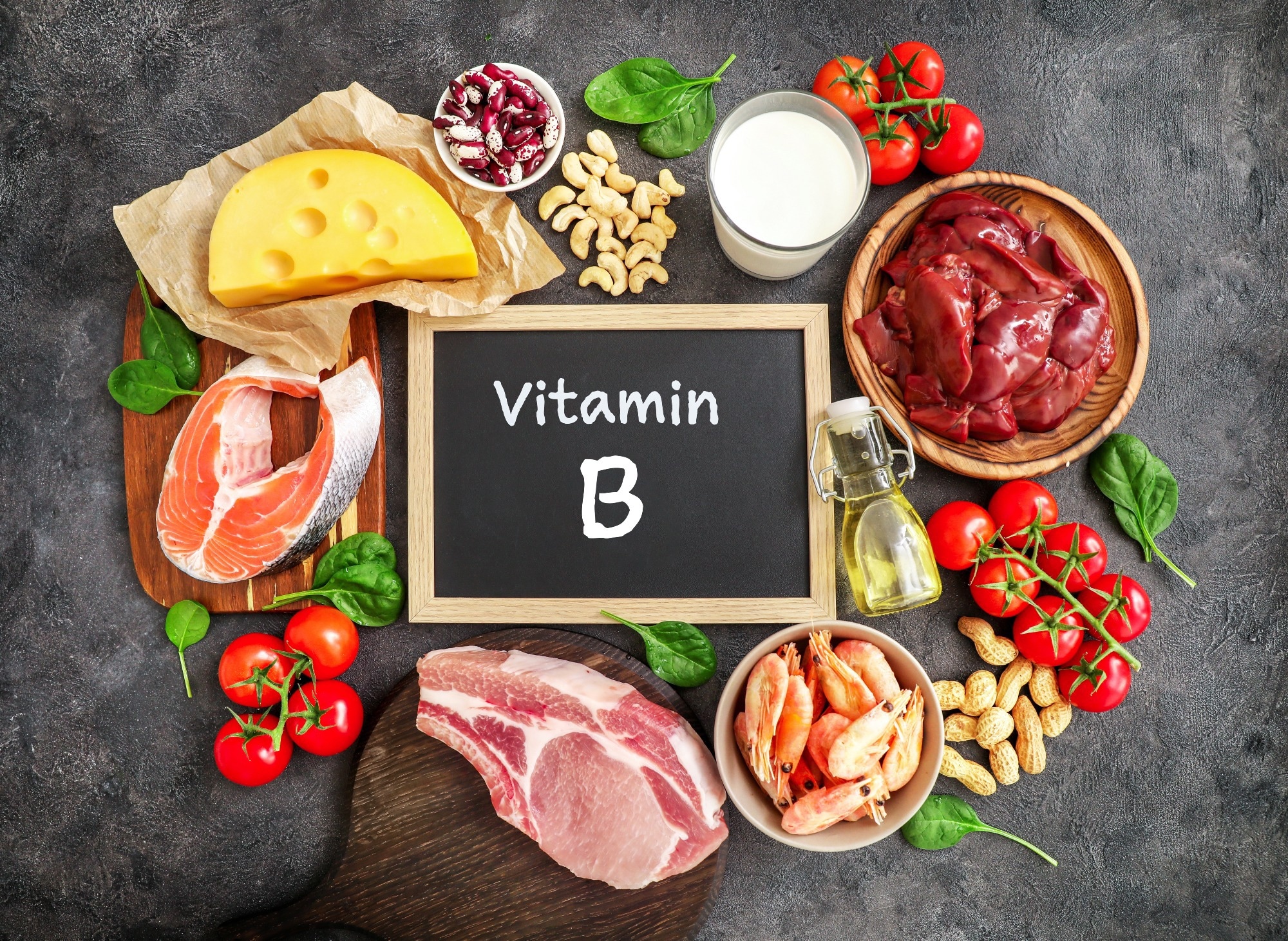 Study: Genetic dissection of stool frequency implicates vitamin B1 metabolism and other actionable pathways in the modulation of gut motility. Image credit: LumenSt/Shutterstock.com
A recent study in Gut focused on identifying genes and mechanisms involved in gut motility to uncover how vitamin B1 processing influences bowel movement frequency (stool frequency, SF) and identifies potential treatment targets for common digestive disorders that affect millions of patients worldwide.
The role of gastrointestinal motility in food digestion
Gastrointestinal (GI) motility refers to the coordinated muscle contractions that move food, liquids, and waste through the digestive system. This process, known as peristalsis, is controlled by the enteric nervous system and modulated by signals from the brain.
Proper digestive motility is essential for breaking down food, absorbing nutrients, and eliminating waste. This complex process is regulated by interactions among the gut-brain axis, the immune system, and the gut microbiome, with additional influences from diet, exercise, and medications.
Disrupted motility underlies irritable bowel syndrome (IBS), other gut-brain interaction disorders, and severe conditions like chronic intestinal pseudo-obstruction. Even though these are common disorders, clinicians experience significant challenges in their treatment, primarily due to a lack of understanding of their root causes. By studying the genetics of gut motility, researchers hope to identify new treatment targets that go beyond symptom management.
Researchers believe that a comprehensive understanding of the genetics of gut motility could help identify new treatment targets. A previous study developed a unique strategy that focused on measurable disease traits, such as gut motility, to identify genes affecting gut function in IBS patients.
Strategies to measure gut motility
Gut motility can be precisely measured by colonic transit time; however, this method is not practical for large-scale genetic studies needed to discover new genes. In contrast, the current study used a more accessible measure of stool frequency (SF), which estimates how often people have bowel movements.
While SF is not a perfect stand-in for gut motility, it correlates with colonic transit time and captures the full range of motility problems, from constipation to diarrhea. A previous proof-of-study tested this approach by analyzing SF genetics in five European populations. This study successfully identified biological pathways and cell types that control gut contractions. The current study aimed to expand the research by using larger datasets, including an East Asian biobank, to enable broader genetic insights.
Study characteristics and genetic variants
The current study analyzed questionnaire data from 268,606 people across six biobanks, five European ancestry groups, and one East Asian group. SF ranged from 0.98 to 1.42 bowel movements per day across the different populations. IBS prevalence followed a U-shaped pattern, with constipation predominant IBS at one end of the frequency spectrum and diarrhea predominant IBS at the other.
In the European meta-analysis, a total of 7,879,955 genetic variants were analyzed, yielding 3,083 significant genetic markers at 12 independent genomic locations, including two that had never been linked to SF. Separate analyses by sex did not reveal any additional genetic signals.
Genetics accounted for about 7 percent of the variation in SF among Europeans. A significant genetic overlap was observed with 164 conditions spanning digestive, cardiovascular, musculoskeletal, neurological, and psychiatric domains. SF also showed genetic connections to various pain-related traits.
Combining all 268,606 participants in a multi-ancestry analysis revealed 479 significant markers across 18 genomic locations. Together, these corresponded to 21 independent genetic signals, including 10 newly identified loci, nearly doubling the number previously linked to stool frequency. Mendelian randomization analyses revealed bidirectional causal effects between SF and diverticular disease, while also showing that SF has causal effects on IBS, but IBS does not causally influence SF. Hemorrhoids were found to have a negative causal effect on SF, suggesting a protective effect against higher stool frequency. A total of 21 genetic locations were identified along with 197 protein-coding genes.
Fine mapping indicates vitamin B1 links to GI motility
Fine mapping determined specific genetic variants that influence GI motility. The analysis pinpointed three specific genetic variants with high confidence: rs12407945 in Europeans, and rs2581260 and rs12022782 in the multi-ancestry analysis.
The top variant affects SLC35F3, a gene that transports vitamin B1 into cells, influencing expression in the brain and digestive tract and potentially integrating central and enteric nervous system control of motility. The second variant links to hemorrhoids, but its mechanism remains unclear. The third affects XPR1, a phosphate exporter also linked to blood pressure. Phosphate export by XPR1 is essential for converting thiamine into its biologically active form, thiamine pyrophosphate (TPP). Other notable genes include KLB, which regulates bile acid metabolism and colonic transit, and COLQ, which controls gut nerve signaling and is associated with diverticular disease risk.
SLC35F3 transports thiamine into cells, while XPR1 exports phosphate needed to activate it. Analysis of 98,449 participants confirmed that higher thiamine intake was associated with higher SF in observational dietary data, with the effect depending on which gene variants a person carried. This suggests these genes regulate how the body uses vitamin B1 to control gut motility rather than acting through a single organ or pathway.
Drug signature analysis computationally prioritized 831 compounds that could speed up or slow down gut motility based on gene expression patterns. These could be further explored for better treatment opportunities, but have not yet been tested experimentally in this context.
Conclusions
This genetic analysis of SF reveals new insights into how the gut controls motility. The study uncovered a surprising role for vitamin B1 metabolism in gut motility. This discovery opens possibilities for dietary or drug interventions targeting thiamine pathways.
Because SF is a questionnaire-based proxy for motility, and dietary thiamine intake was assessed observationally rather than through intervention trials, the authors emphasize the need for mechanistic studies and clinical validation. Many existing medications, particularly cardiovascular drugs, could be repurposed to treat IBS and other gut motility disorders, but further experimental and clinical investigation is required.
Download your PDF copy now!
 Epstein-Barr virus together with a gene variant contributes to onset of multiple sclerosis